Macronutrient Calculator: How to Calculate Your Ideal Protein, Carb, and Fat Intake
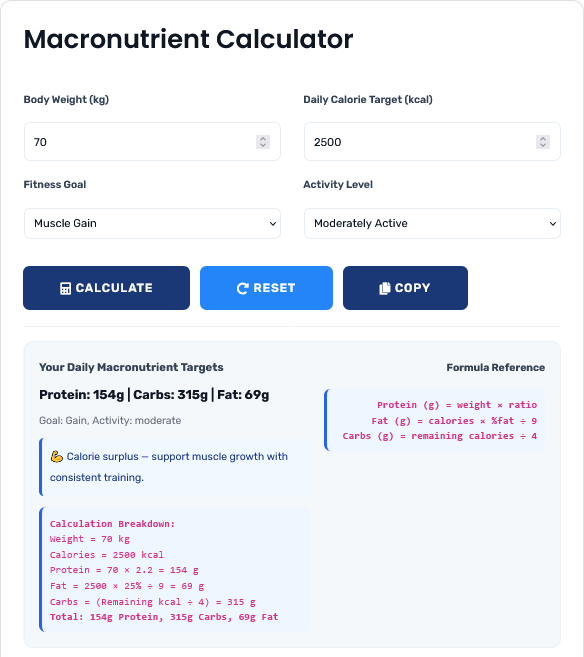
Hitting your calorie target only tells half the story — how those calories are split between protein, carbohydrates, and fat has a major impact on body composition, energy levels, training performance, and satiety. This macronutrient calculator (often shortened to "macro calculator") turns your body weight, calorie target, activity level, and fitness goal into practical daily gram targets for protein, carbs, and fat.
Whether you're aiming for fat loss, muscle gain, or simply want a more structured approach to eating, understanding your macros helps you make informed food choices instead of guessing.
Macro tracking is useful in several common situations, including:
- Fat loss: keeping protein high to protect muscle while in a calorie deficit
- Muscle gain: ensuring enough protein and carbs to support training and recovery during a surplus
- General health tracking: building more balanced, consistent eating habits
- Sport-specific nutrition: adjusting carbohydrate intake around training volume
For a complete view of your nutrition and energy needs, explore our full nutrition calculator collection.
What Are Macronutrients and Why Do Ratios Matter?
Macronutrients are the three nutrient categories that provide energy: protein, carbohydrates, and fat. Each plays a distinct role in the body:
- Protein (4 kcal/g): supports muscle repair and growth, immune function, and satiety
- Carbohydrates (4 kcal/g): the body's primary and most efficient fuel source, especially for higher-intensity exercise
- Fat (9 kcal/g): supports hormone production, vitamin absorption, and long-duration energy needs
A calorie target alone doesn't specify this breakdown — that's where a macro calculator becomes useful, converting a single calorie number into actionable protein, carb, and fat targets tailored to your goal.
How This Macronutrient Calculator Works
Step 1 — Protein target:
Protein (g) = body weight (kg) × protein ratio (varies by goal)
Step 2 — Fat target:
Fat (g) = (daily calories × fat %) ÷ 9
Step 3 — Carbohydrate target:
Carbs (g) = (remaining calories after protein and fat) ÷ 4
The protein ratio and fat percentage used in this calculator shift automatically based on your selected goal and activity level, since fat loss, muscle gain, and maintenance each benefit from slightly different macronutrient emphasis.
Typical Macronutrient Ranges by Goal
| Goal / Population | Protein Range | Carbohydrate Range | Fat Range | Key Considerations |
|---|---|---|---|---|
| Sedentary Adults | 0.8-1.0 g/kg | 3-4 g/kg | 0.8-1.0 g/kg | General health maintenance, weight stability |
| Endurance Training | 1.4-1.8 g/kg | 6-10 g/kg | 1.0-1.5 g/kg | Glycogen replenishment, muscle repair |
| Strength Training | 1.6-2.2 g/kg | 4-7 g/kg | 1.0-1.5 g/kg | Muscle protein synthesis, recovery |
| Older Adults (65+) | 1.2-2.0 g/kg | 3-5 g/kg | 0.8-1.2 g/kg | Sarcopenia prevention, bone health |
| Fat Loss | 1.6-2.4 g/kg | 2-4 g/kg | 0.8-1.2 g/kg | Lean mass preservation, satiety |
Common Macronutrient Misconceptions
Myth: "Everyone needs exactly 0.8g of protein per kg of body
weight."
Reality: The 0.8g/kg figure is a minimum intake recommended to
prevent deficiency in sedentary adults — it is not necessarily an optimal target for
active individuals, older adults, or those pursuing fat loss or muscle gain, who
often benefit from higher intakes.
Myth: "Carbs should always be avoided in the evening."
Reality: Carbohydrate timing matters more for athletes with heavy
training loads than for sedentary individuals. For most people, total daily carb
intake matters far more than the specific time of day it's eaten. Matching carb
intake to your activity pattern is generally more useful than following rigid
timing rules.
Macronutrient Interactions Worth Knowing
Beyond hitting individual gram targets, how nutrients are combined can influence how well they're used by the body:
| Nutrient Pairing | Why It Matters | Practical Tip |
|---|---|---|
| Protein + Leucine-rich foods | Supports muscle protein synthesis | Include eggs, whey, or dairy around workouts |
| Carbs + Post-Exercise Timing | Supports glycogen restoration | Pair carbs with protein shortly after intense training |
| Iron + Vitamin C | Improves non-heme iron absorption | Pair citrus fruits with plant-based iron sources |
| Calcium + Vitamin D | Enhances calcium absorption | Pair dairy or fortified foods with sunlight exposure |
Reference Standards and Further Reading
General macronutrient guidance in the field is often drawn from the Dietary Reference Intakes published by the Institute of Medicine (10-35% protein, 45-65% carbohydrate, 20-35% fat of total calories) and sports nutrition position stands from organizations such as the International Society of Sports Nutrition, which typically recommend 1.4-2.0 g/kg protein for athletes. These are population-level guidelines — individual needs vary based on activity, age, health status, and goals.
How to use this calculator responsibly: Treat the results as a practical starting point rather than a rigid prescription. Track how you feel, perform, and progress over several weeks at a given macro split, and adjust based on real-world results. If you have a medical condition such as kidney disease, liver disease, or diabetes, work with a registered dietitian or physician, since these conditions can significantly change appropriate macronutrient targets.
Frequently Asked Questions About Macronutrient Calculations
Set a moderate calorie deficit based on your TDEE, then prioritize a higher protein intake — generally 1.6-2.4g per kg of body weight — to help preserve lean muscle mass while losing fat. This calculator adjusts your protein, carb, and fat targets automatically once you select "Fat Loss" as your goal.
For muscle gain, a slight calorie surplus combined with adequate protein (around 1.6-2.2g per kg body weight) and sufficient carbohydrates to fuel training generally supports lean mass growth better than a large, unstructured surplus.
The 0.8g/kg figure is a minimum intake designed to prevent deficiency in sedentary adults. Active individuals, older adults, and people pursuing fat loss or muscle gain typically benefit from higher protein intakes than this baseline.
Yes. Conditions such as kidney disease, liver disease, or diabetes can significantly change appropriate macronutrient targets. Always consult a registered dietitian or physician for condition-specific guidance rather than relying solely on general calculator estimates.
For most people, total daily carbohydrate intake matters more than the exact timing. Athletes with high training volumes may benefit from timing carbs around workouts to support performance and recovery, but rigid rules like "no carbs after 6pm" aren't well supported for the general population.
