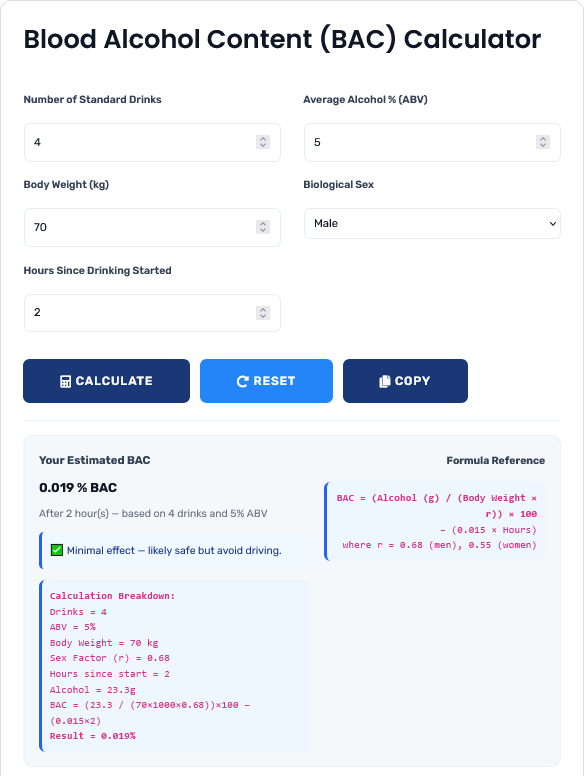
Blood Alcohol Content Calculator – Check Your BAC Instantly with an Online Calculator
Understanding your alcohol level is essential for making safe and responsible decisions. The Blood Alcohol Content Calculator helps you estimate your BAC based on alcohol intake, body weight, gender, and time. As part of our trusted health calculators collection, this smart online calculator provides fast and reliable insights to help you understand alcohol intoxication and its effects on your body. This specialized tool is part of our comprehensive medical calculators suite designed for evidence-based health and safety monitoring.
What Is Blood Alcohol Content (BAC)?
Blood Alcohol Content (BAC), also known as blood alcohol concentration, is a measurement of the amount of alcohol present in your bloodstream. It is typically expressed as a percentage. For example, a BAC of 0.08% means there are 0.08 grams of alcohol per 100 mL of blood or 80 milligrams of alcohol per 100 milliliters of blood.
BAC is widely used by medical professionals, law enforcement agencies, researchers, and public health officials to measure alcohol intoxication objectively. Higher BAC levels indicate increased impairment, progressively affecting judgment, coordination, reaction time, cognitive function, and eventually vital physiological processes.
The Physiology of Alcohol Metabolism
Understanding how your body processes alcohol helps explain BAC calculations:
- Absorption: Alcohol enters bloodstream primarily through stomach (20%) and small intestine (80%)
- Distribution: Alcohol distributes throughout body water (not fat tissue), explaining gender/weight differences
- Metabolism: Liver enzymes (ADH and ALDH) convert alcohol to acetaldehyde then to acetate
- Elimination: Average metabolism rate is 0.015% BAC per hour (about one standard drink per hour)
- Individual Variations: Genetics, liver health, medications, and food intake affect metabolism rates
Legal BAC Limits and Driving Laws
In many countries, including the United States, the legal BAC limit for driving is 0.08% for adults aged 21 and over. This limit represents the point at which driving impairment becomes statistically significant for the average person. Drivers exceeding this limit may face serious legal consequences including DUI/DWI charges, fines averaging $10,000 with legal fees, license suspension (typically 6-12 months), mandatory alcohol education programs, and potential incarceration.
For individuals under the legal drinking age, most jurisdictions enforce zero-tolerance or near-zero-tolerance policies with BAC limits ranging from 0.01% to 0.05%. Commercial drivers typically face stricter limits of 0.04% BAC. For a complete overview of all our calculation tools, explore our full calculators directory covering various health, safety, finance, and educational calculation needs.
Standard Drink Equivalents and Measurements
Accurate BAC calculation requires understanding standard drink measurements:
- Beer: 12 oz (355 ml) at 5% alcohol = 0.6 oz pure alcohol
- Wine: 5 oz (148 ml) at 12% alcohol = 0.6 oz pure alcohol
- Distilled Spirits: 1.5 oz (44 ml) at 40% alcohol = 0.6 oz pure alcohol
- Malt Liquor: 8-9 oz at 7% alcohol = 0.6 oz pure alcohol
- Fortified Wine: 3-4 oz at 17-20% alcohol = 0.6 oz pure alcohol
Note that many drinks served in bars/restaurants exceed these standard measurements, with wine pours often 6-8 oz and mixed drinks containing 2-3 oz of spirits.
Alcohol and Its Effects on Health
Alcohol consumption affects the body through complex biochemical pathways with both acute and chronic implications. Short-term effects include vasodilation, diuresis, neurotransmitter disruption (particularly GABA and glutamate systems), impaired coordination, reduced judgment, and altered perception. These effects increase exponentially with rising blood alcohol concentration levels due to alcohol's dose-dependent pharmacological actions.
Long-term alcohol use activates inflammatory pathways, oxidative stress mechanisms, and hormonal disruptions that can lead to serious health problems including alcoholic liver disease (fatty liver → hepatitis → cirrhosis), cardiomyopathy, hypertension, stroke, pancreatic damage, cognitive impairment, and multiple forms of cancer (especially oral, esophageal, liver, breast, and colorectal cancers). For comprehensive health tracking alongside alcohol monitoring, explore our complete health calculators collection for various wellness assessment needs.
BAC Effects: Progressive Impairment Stages
Alcohol produces predictable effects at specific BAC ranges:
0.02-0.03% BAC
Slight euphoria, reduced inhibition, minor judgment impairment. Legally impaired for underage/commercial drivers.
0.04-0.06% BAC
Reduced coordination, exaggerated emotions, impaired reasoning. Some countries' legal driving limit.
0.07-0.09% BAC
Significant impairment in balance, speech, vision, reaction time. U.S. legal limit for driving (0.08%).
0.10-0.125% BAC
Major motor control loss, slurred speech, nausea, emotional instability.
0.13-0.15% BAC
Gross motor impairment, blurred vision, serious dysphoria, lack of physical control.
0.16-0.30% BAC
Medical emergency territory: confusion, stupor, vomiting, respiratory depression risk.
0.31-0.45% BAC
Life-threatening: unconsciousness, coma risk, potential fatal respiratory depression.
Potential Benefits of Light to Moderate Drinking
Some epidemiological research suggests that light to moderate alcohol consumption (defined as up to 1 drink daily for women, 2 for men) may be associated with certain cardiovascular benefits. These potential benefits include increased HDL cholesterol, reduced platelet aggregation, improved insulin sensitivity, and potential anti-inflammatory effects from polyphenols in certain alcoholic beverages like red wine.
However, these benefits are not universal, dose-dependent, and must be weighed against significant risks. The American Heart Association cautions against starting alcohol consumption for potential heart benefits, noting that similar benefits can be achieved through diet, exercise, and other lifestyle factors without alcohol-associated risks.
Risks of Heavy Alcohol Consumption
Heavy drinking provides no health benefits and significantly increases multiple health risks according to all major medical organizations. The CDC defines heavy drinking as 8+ drinks per week for women, 15+ for men. Binge drinking (4+ drinks for women, 5+ for men in 2 hours) represents particularly high-risk consumption patterns.
Excessive alcohol use represents the third leading preventable cause of death in the United States, contributing to approximately 95,000 deaths annually. Risks include alcoholic liver disease, hypertension, hemorrhagic stroke, cardiomyopathy, pancreatitis, Wernicke-Korsakoff syndrome, fetal alcohol spectrum disorders, and increased risk of multiple cancers.
Individual Factors Affecting BAC
Multiple variables explain why different people experience different effects from the same alcohol consumption:
- Body Composition: Higher body water percentage (typically higher in men) dilutes alcohol
- Metabolic Rate: Varies by age, genetics, liver health, and hormonal status
- Food Consumption: Eating before/during drinking slows alcohol absorption
- Medications: Many drugs interact with alcohol metabolism (especially benzodiazepines, opioids, antidepressants)
- Tolerance: Regular drinkers may show fewer symptoms at given BAC but impairment remains
- Hydration Status: Dehydration concentrates alcohol in bloodstream
- Menstrual Cycle: Hormonal fluctuations can affect alcohol metabolism in women
How Does the Blood Alcohol Content Calculator Work?
The Blood Alcohol Content Calculator uses scientifically validated formulas to estimate BAC with reasonable accuracy. The most common algorithm is the Widmark formula: BAC = [Alcohol consumed in grams / (Body weight in grams × r)] × 100 - (Metabolism rate × hours), where r is the distribution ratio (0.55 for women, 0.68 for men).
This online calculator processes complex pharmacokinetic calculations considering body weight, gender, number of standard drinks, alcohol percentage, and time elapsed since drinking began. While it cannot account for all individual variables and does not replace medical testing (breathalyzer, blood test), it offers a scientifically-informed approximation for awareness and safety planning. For those interested in nutritional aspects of alcohol consumption, our specialized nutrition calculators can help analyze the caloric and nutritional impact of alcoholic beverages.
Advanced BAC Calculation Methods
Beyond basic formulas, several specialized approaches exist:
- Widmark Formula: Most common method accounting for body water distribution
- Watson Method: More precise calculation based on total body water estimates
- Seidl Model: Accounts for drinking patterns over time rather than total consumption
- Forensic Calculations: Used in legal settings with retrograde extrapolation
- Continuous Monitoring: Emerging wearable technology with transdermal alcohol sensors
Functions of the Blood Alcohol Content Calculator
This calculator incorporates sophisticated features for comprehensive alcohol assessment:
- Estimate blood alcohol concentration using multiple validated formulas
- Account for body weight, gender, age, and metabolic differences
- Calculate alcohol elimination rates and time to sober estimation
- Provide instant BAC results with corresponding impairment descriptions
- Accessible as a responsive online calculator across all devices
- Include standard drink definitions for accurate consumption input
- Offer time-based projections for when BAC will drop below legal/safe limits
- Provide educational information about alcohol metabolism and risks
- Allow comparison between different alcoholic beverage types
- Include safety recommendations based on calculated BAC levels
How to Use the Blood Alcohol Content Calculator?
Enter Your Body Weight
Input your current body weight in pounds or kilograms. Accuracy here significantly affects calculation precision as alcohol distributes in body water proportionally to weight.
Select Gender
Choose your biological gender, as alcohol metabolism and distribution differ substantially between males and females due to average body water percentage differences (men ~60%, women ~55%).
Add Number and Type of Drinks
Enter the total number and specific types of alcoholic drinks consumed, selecting from standardized categories or custom alcohol percentages.
Enter Time Duration and Pattern
Specify how much time has passed since you started drinking and whether consumption was spaced evenly or concentrated in shorter periods.
Include Additional Factors (Optional)
Input additional variables like food consumption, medication use, or known metabolic factors for enhanced accuracy.
View Your BAC Result and Interpretation
The calculator instantly displays your estimated blood alcohol concentration with detailed interpretation including impairment level, legal status, and safety recommendations.
Limitations and Important Considerations
While valuable, BAC calculators have important limitations:
- Estimated values only - never use for legal or medical decision-making
- Cannot account for all individual metabolic variations
- Does not replace professional assessment or certified testing devices
- Accuracy decreases with extreme consumption or unusual metabolic conditions
- Should be used for educational purposes and general awareness only
- Never use to determine fitness to drive or operate machinery
Sobriety Testing and Alternative Assessment Methods
Beyond BAC calculation, several assessment approaches exist:
- Field Sobriety Tests: Standardized tests of balance, coordination, and cognition
- Breathalyzers: Measure alcohol in breath, correlate with blood alcohol
- Blood Tests: Most accurate method but requires medical professional
- Saliva Tests: Emerging technology for non-invasive alcohol detection
- Transdermal Sensors: Wearable devices that detect alcohol through skin
- Cognitive Testing Apps: Digital tools assessing reaction time and coordination
Legal and Ethical Implications
Understanding BAC calculations has significant legal dimensions:
- DUI/DWI laws vary by jurisdiction but universally penalize driving above legal limits
- Many employers enforce zero-tolerance policies for safety-sensitive positions
- Insurance implications include premium increases or policy cancellation after DUI
- Professional licensing consequences for healthcare, legal, and transportation professionals
- Criminal liability for serving alcohol to minors or visibly intoxicated persons
- Social host liability laws in many jurisdictions
Why Use an Online BAC Calculator?
Estimating blood alcohol levels through intuition or simple rules of thumb is notoriously inaccurate and dangerously misleading. Individual physiological differences mean two people consuming identical drinks can achieve dramatically different BAC levels. Using a trusted online calculator removes this dangerous guesswork by applying evidence-based pharmacokinetic formulas to provide a scientifically-informed estimate of your blood alcohol concentration.
As part of our professionally designed health calculators collection, this tool helps users make informed and responsible decisions, especially before driving, working, operating machinery, or engaging in activities requiring full cognitive and motor function. It offers consistency, speed, and peace of mind without requiring complex mathematical calculations or specialized knowledge of alcohol pharmacology.
Why Accuracy Matters?
Accuracy plays a critical role in alcohol consumption decisions with significant safety, legal, and health implications. Research shows that individuals typically underestimate their BAC by 30-50% when guessing. This underestimation contributes significantly to alcohol-related accidents, with NHTSA reporting that alcohol-impaired driving fatalities account for approximately 30% of all traffic-related deaths in the United States.
An accurate BAC estimate helps reduce the chances of accidents, legal consequences (average DUI conviction costs $10,000+), occupational repercussions, and long-term health issues. By relying on a precise online calculator, users can better understand their physiological limits and avoid situations that may endanger themselves or others while making more informed decisions about alcohol consumption patterns.
Educational Applications
Beyond personal use, BAC calculators serve important educational functions:
- University alcohol awareness programs and harm reduction initiatives
- Driver education courses and DUI prevention programs
- Workplace safety training for industries with alcohol policies
- Healthcare professional education about alcohol assessment
- Parent-teen conversations about alcohol responsibility
- Public health campaigns promoting safe consumption guidelines
Final Thoughts
The Blood Alcohol Content Calculator is a reliable, evidence-based tool designed to promote awareness, safety, and responsible decision-making regarding alcohol consumption. Whether you are monitoring your alcohol intake for personal awareness, learning about intoxication levels for educational purposes, or making informed lifestyle choices about alcohol consumption patterns, this calculator provides scientifically-grounded insights with practical applications.
As one of our trusted health calculators, it supports better decision-making through accuracy, accessibility, and educational value. Use this online calculator whenever you need a quick, reliable estimate of potential alcohol impairment, and explore our other health-focused tools to maintain comprehensive awareness of factors affecting your wellbeing and safety.